
Published by UNIFACTO COCOA LTD
�� Ikom, Cross River State, Nigeria
✉️ info@unifacto-cocoa.com
Introduction: A Changing Climate, A Changing Crop
Cocoa farming is no longer business as usual. Rising temperatures, erratic rainfall, soil degradation, and deforestation are putting the future of cocoa production—especially in West Africa—at serious risk.
At UNIFACTO COCOA LTD, we believe the answer is not just adaptation, but transformation. One of the most effective and proven strategies for sustainable cocoa farming is agroforestry—a farming system that mimics nature, protects biodiversity, and strengthens climate resilience from the roots up.
What is Cocoa Agroforestry?
Agroforestry is the deliberate integration of cocoa trees with shade trees, fruit trees, timber species, and other crops in a way that improves land health and farmer livelihood. It’s a nature-based solution that turns monoculture plantations into thriving, multifunctional landscapes.
Why Agroforestry Works for Cocoa
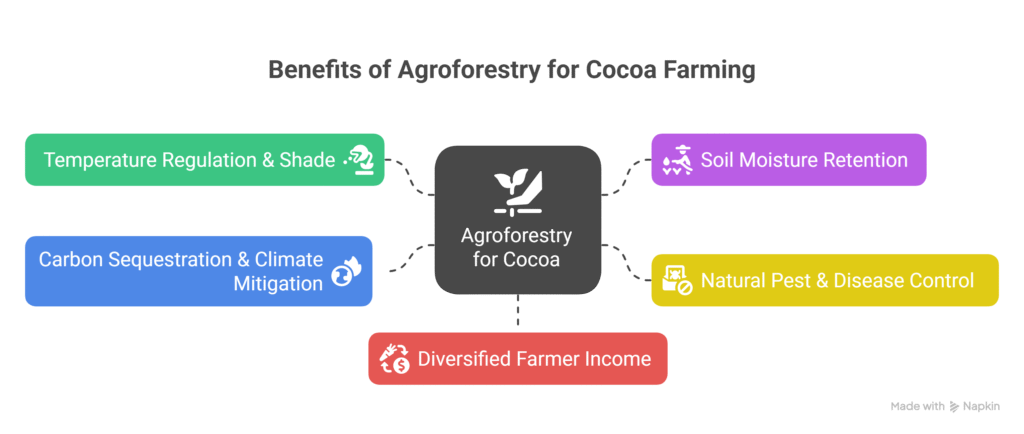
�� 1. Temperature Regulation & Shade
Shade trees reduce direct sunlight on cocoa plants, helping maintain optimal leaf temperature and reduce heat stress on pods.
�� 2. Soil Moisture Retention
Leaf litter improves organic content and tree canopy reduces evaporation, helping cocoa withstand dry seasons.
�� 3. Natural Pest & Disease Control
Biodiverse farms attract beneficial insects and birds while discouraging pest outbreaks, reducing dependency on chemical inputs.
�� 4. Carbon Sequestration & Climate Mitigation
Trees absorb carbon dioxide, helping combat climate change while improving microclimates around cocoa farms.
�� 5. Diversified Farmer Income
Intercropping with plantain, banana, citrus, or timber gives farmers secondary income streams, making them less vulnerable to cocoa price fluctuations.
The UNIFACTO Agroforestry Model
We are actively rolling out agroforestry models across our farmer clusters in Cross River State with support from local and international experts.
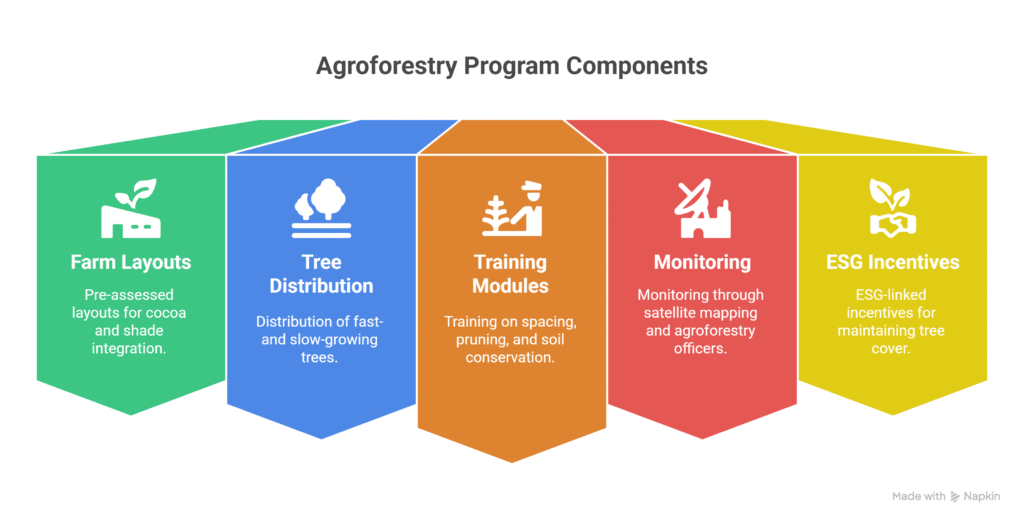
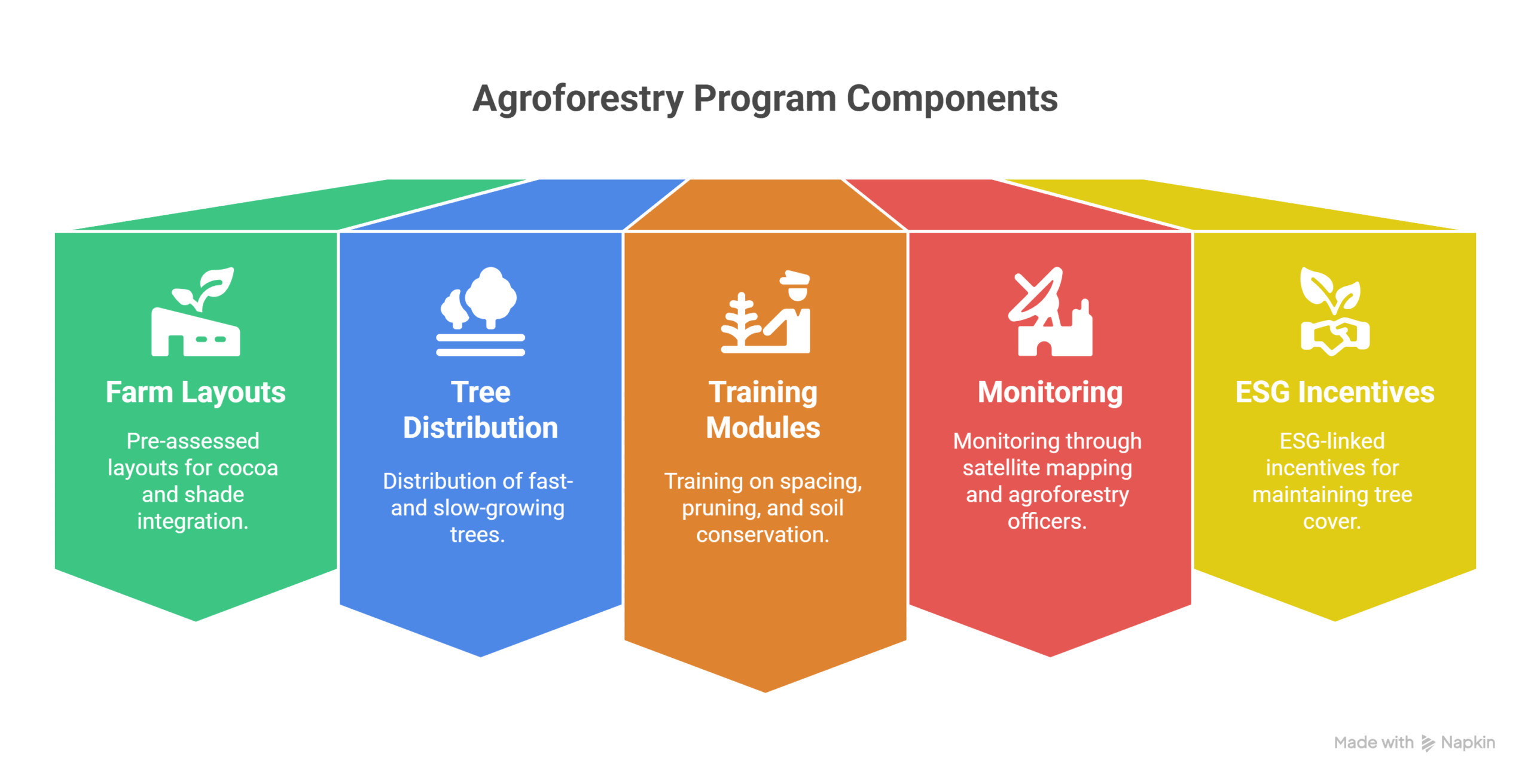
Our program includes:
- Pre-assessed farm layouts for cocoa + shade integration
- Distribution of fast- and slow-growing trees (e.g., Gliricidia, Iroko, Mango, Avocado, Neem)
- Training modules on spacing, pruning, and soil conservation
- Monitoring through satellite mapping and on-ground agroforestry officers
- ESG-linked incentives for farmers maintaining tree cover compliance
Challenges and How We Address Them
| Challenge | Our Solution |
| Land tenure issues | Farm mapping and cooperative-led land management |
| Shade density mismanagement | Training on optimal shade ratios (30–40%) |
| Short-term thinking | Agroforestry-linked bonus payments and crop-diversification grants |
Global Recognition for Cocoa Agroforestry
UNIFACTO’s model aligns with:
- Brazil’s “Cacau Cabruca” system in Bahia
- Ecuador’s multi-strata cocoa systems
- Rainforest Alliance & Fairtrade agroforestry compliance benchmarks
- EU Deforestation-Free Cocoa regulations
Conclusion: Trees Are Not a Threat — They Are the Future
Cocoa and trees can grow together—and must. Agroforestry is not only a path to higher resilience and productivity; it is also a strategy for dignity, diversification, and environmental stewardship.
At UNIFACTO COCOA LTD, we are planting the seeds—literally and figuratively—for a climate-smart cocoa economy, rooted in sustainability and shared prosperity.
�� View our cocoa agroforestry farms and training programs at: www.unifacto-cocoa.com